In North America, whenever two families have proven unable or unwilling to get along, we refer to them as the “Hatfields and McCoys.” It’s likely that few people who use this antiquated reference have any actual knowledge of these historical families. Nonetheless, the reference seems to have stuck, at least since I was a kid in the 1970s.
It’s in the spirit of these two not-quite-forgotten families that I offer my own version of a real-life “family feud.” This one involved the Williamses and the Lowes.
Relying, as I often do, on Newspapers.com, I type in search parameters for my Williams family around the Worcester area in the 1880s and 1890s. This is the most recent period in which I can place my Williams family—including my great-grandfather Alfred, along with his wife, Emily—in that vicinity.
Much to my surprise—or perhaps delight—the search brings up several articles from Berrow’s Worcester Journal, published in Worcester, Worcestershire, England. The newspaper was originally founded in 1690 and, surprisingly, is still in print today, with the publication laying claim to being “the oldest newspaper in the world in continuous and current production.” Seems like a bold claim, but…who am I to argue?
Disgraceful Conduct at Wribbenhall
From the August 11, 1894 edition, I read the following headline:
DISGRACEFUL CONDUCT AT WRIBBENHALL — Minnie Daisy Lowe, a young married woman, of Wribbenhall, was charged, on two summonses, with having assaulted Emily Williams, a neighbour, on July 30th and 31st.
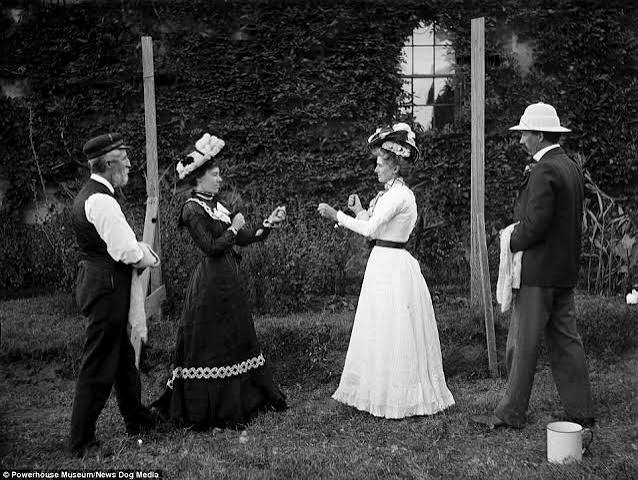
The story goes that Emily Williams—my paternal great-grandmother—became embroiled in a particularly unpleasant neighbourhood dispute with Lowe. Following threats made against her, Emily sought assistance from a Sergeant Dance, but the confrontation continued when Lowe allegedly threw a rug (a rug?!?) at Emily in the policeman’s presence.
Not to be outmatched, the following day Lowe threw a jug of water over Emily, this time witnessed by a Constable Cooper. The disturbances escalated into a public spectacle, with police describing Lowe’s behaviour as abusive and alarming to the neighbourhood.
Lowe maintained that Emily had brought the charges out of spite because Lowe had previously testified against Emily’s husband—my great-grandfather Alfred—in an earlier court case.
Despite her denials and the testimony of neighbours, the magistrates found Lowe guilty of both assaults, fining her two shillings and sixpence plus costs for each offence.
While I cannot help but revel in the conclusion that Ms. Lowe was punished for assaulting my great-grandmother, I also cannot help wondering what precipitated the events—and what my great-grandfather had been charged with in that earlier court case. I remind myself of the old adage, “innocent until proven guilty.”
Maybe.
Round Two
It seems, however, that the peace was short-lived, as it often is in these unfortunate cases.
In an October 1894 edition of Berrow’s Worcester Journal, under the section heading “County Petty Sessions,” I read of further antics involving the two families.
The story goes that Alfred Williams, a horse dealer, became embroiled in a violent street confrontation involving his wife Emily, his brother George Williams, and their neighbours, Frank Victor Lowe and his wife Minnie Lowe.
According to Alfred’s testimony, the trouble began when Minnie deliberately pushed George against Emily, who was carrying a child, presumably my great-uncle Dennis Williams. Frank Lowe subsequently grabbed Alfred by the neck and threw him to the ground, where George—Alfred’s younger brother—and Minnie allegedly joined in the assault on Alfred.
Emily attempted to intervene, shouting for help, but was herself attacked by Minnie.
During questioning, Alfred revealed that he and his brother George had not been on friendly terms for some time, apparently because they were engaged in the same line of business. The opposing witnesses accused Alfred of deliberately provoking the confrontation, and the magistrates heard sharply conflicting accounts of the incident.
Ultimately, the charges against both women and George were dismissed, while Alfred was fined £1 plus costs and Frank Lowe five shillings plus costs. The newspaper described the incident as one of several disturbances in the Wribbenhall neighbourhood known as Whispering Street, suggesting that tensions between these families had become a matter of considerable local interest.
What initially precipitated these events—and whether these two incidents tell the entirety of their feud—is lost to history. But that’s the great thing about genealogy. I’ll keep digging, and I’ll continue to find more and more. Someday.


Leave a Reply